









 Garantía de entrega








SKU/Artículo: AMZ-B0DQZQ5H1H
GODIYMODULES
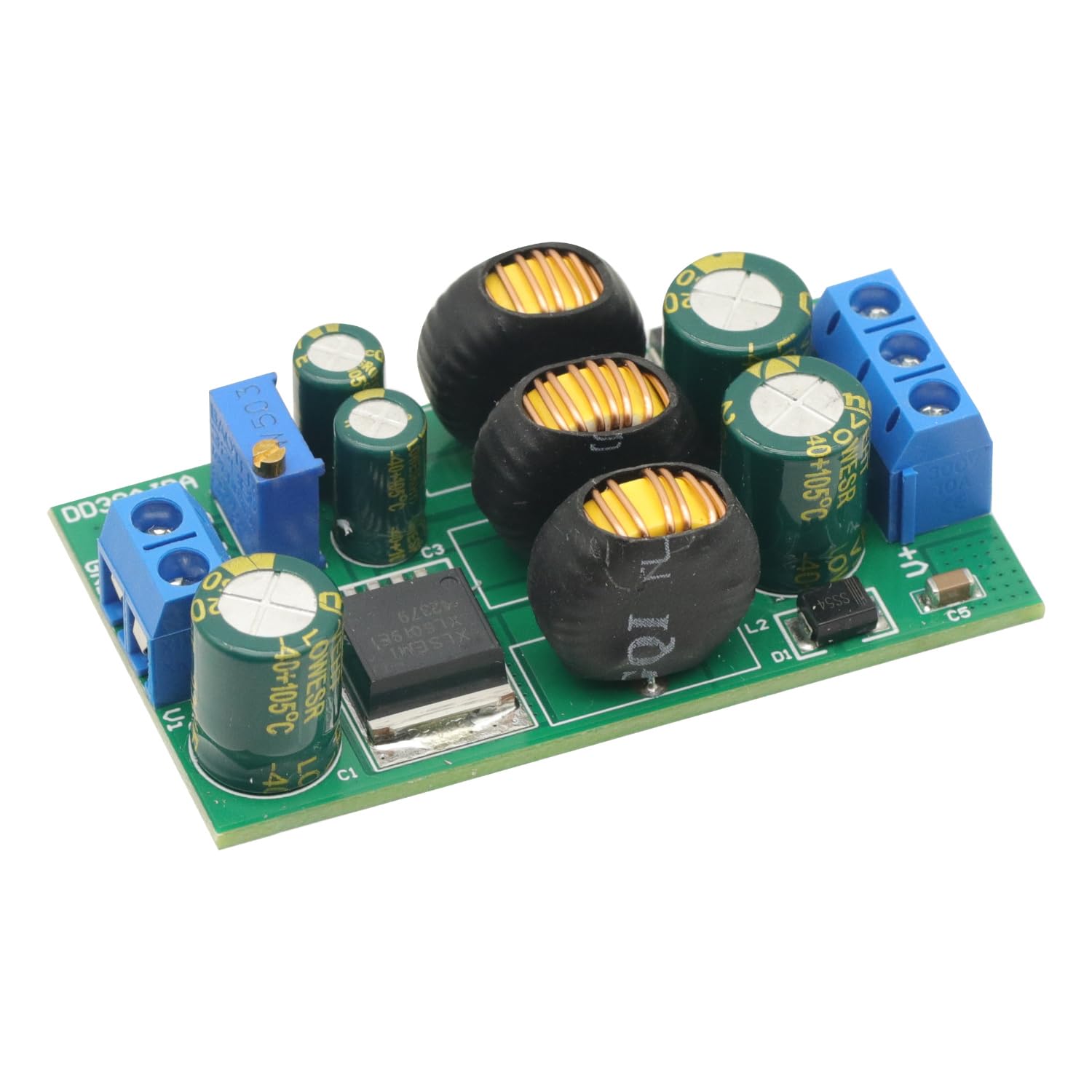
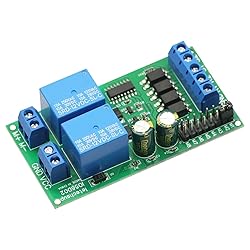
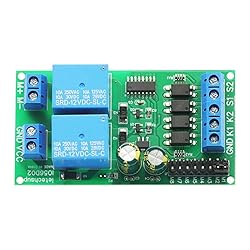
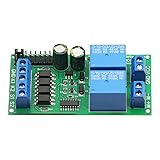
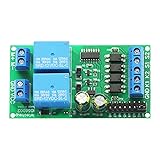
12V 24V DC Motor Controller Relay Board Forward Reverse Control Limit Start Stop Switch Pusher for Electric Curtain Automatic Door
Detalles del producto
Disponibilidad:
En stock
En stock
Peso con empaque:
0.30 kg
0.30 kg
Devolución:
Sí
Sí
Condición
Nuevo
Nuevo
Producto de:
Amazon
Amazon
Viaja desde
USA
USA
Sobre este producto
- Product parameters:1 Working voltage: DC 12V (12V version)≥ motor load x3);2 Applicable motor: brushed DC motor;3 Maximum load current: 4.5A;4 Signal input: active low (NPN);5 Working modes: 9 optional modes, including momentary, self-locking, etc.;6 Working current (excluding motor): Quiescent Current: 4MA, Forward or Reverse working current: 40MA7 Size: 75*40*19mm;8 Weight: 37.6 grams.Pin DescriptionVCC : Power Supply +GND : Power Supply -M+ : Motor +M- : Motor -GND : Trigger Signal -K1 : Forward input controlK2 : Reverse input controlS1 : Forward limit signalS2 : Reverse limit signal
S/ 85.26
44% OFF
S/ 47.37
IMPORT EASILY
By purchasing this product you can deduct VAT with your RUT number
S/ 85.26
44% OFF
S/ 47.37
 Llega en 5 a 10 días hábiles
con envío
 Tienes garantía de entrega
Conoce más detalles
Working mode 1: Self-locking mode, the signal only needs to be triggered once, and the module self-locking keeps running. Working mode 2: The automatic start version of mode 0 adds the power-on automatic start function on the basis of mode 0, that is, each time the module is powered on, it will automatically start forward rotation. This version is more suitable as a motion module between two points, and it will work automatically when the module is powered on. Working mode 3: Momentary mode. When there is a forward rotation signal, the motor rotates forward; when there is a reverse rotation signal, the motor reverses; when there is no forward rotation signal and no reverse rotation signal, the motor stops; when forward rotation, if there is a forward rotation limit, it will stop forward rotation; During rotation, if there is a reverse rotation limit signal, the reverse rotation will be stopped. Removing the two limit signals will not restore the rotation, and it is necessary to re-input the rotation signal to start the forward and reverse rotation. Working mode 4: The level-driven mode, similar in function to the H-bridge, operates according to the following logic: When there is a forward rotation signal and there is no signal at the forward limit, it will rotate forward; when there is a reverse signal and there is no signal at the reverse limit, it will reverse; this version is pure logic type, suitable for single-chip signal input. Pay attention to the forward rotation priority, that is, forward rotation is when both the forward and reverse input meet the conditions. Pay attention to the real-time nature of the level. Working mode 5: Start/Stop mode, the function is the same as mode 0, only the following function details are different: If the forward rotation has been started, input the forward rotation signal again, it will stop immediately; if the reverse rotation has been started, input the reverse rotation signal again, it will stop immediately. For example: there is a forward signal >>> forward rotation immediately; at this time, input the forward rotation signal >>> immediately stop forward rotation. Reverse the same. Working mode 6: The function is the same as mode 0, only the limit signal difference is as follows: The limit signal is only valid for the current time (the leading edge is valid). For example, after starting the forward rotation, it will stop when the forward limit signal is encountered. After the stop, although the forward limit signal is still input, the forward rotation can still be started by inputting the forward rotation signal at this time. When the unidirectional start and end points are on the same motion circle, this specification is usually used, for example, press once to make a circle, and press it again to make another circle. Working mode 7: One-key switch mode, the function is the same as mode 0, only the starting method is different, as follows: Forward rotation signal input, forward rotation after triggering, reverse rotation after re-triggering, and reverse rotation signal input is invalid. Input the forward rotation signal once to start the forward rotation, and stop the forward rotation when the forward limit has a signal; input the forward rotation signal again, start the reverse rotation, and stop the reverse rotation after the reverse rotation limit has a signal. Working mode 8: Forward rotation when there is a forward rotation signal input, reverse rotation when there is no signal, and the reverse rotation signal input is invalid and cannot be input together with other signals. During forward rotation, the forward rotation will be stopped if there is a signal at the forward limit; during reverse rotation, the reverse rotation will be stopped if there is a signal at the reverse limit. Only one limit signal is valid at a time. for example: inputting two limit signals at the same time during reverse rotation cannot stop the motor rotation. Working mode 9: Self-locking-limit normally closed mode, only the difference of the position signal, other functions are the same as mode 0. The limit signal is normally closed (for example, when there is no signal input to the forward limit, the forward rotation cannot be started, and only when the forward limit signal is input, the forward rotation can be started). Motor Requirements: IO56D02 is a DC motor controller, and the applied motor should be a brushed DC motor. Connect the motor connecting wires to the terminals of ''Motor+'' and ''Motor-'' respectively. Motor power requirements: the rated power of 12V DC motor is less than 50W, and the limit value is 100W.
Compra protegida
Disfruta de una experiencia de compra segura y confiable
![]() Garantía de entrega
Garantía de entrega
Con Tiendamia todas tus compras cuentan con Garantía de Entrega o devolución total de tu dinero.
Compras 100% seguras y garantizadas, para que pidas lo que sueñas y lo recibas del mundo a tu puerta.
Saber más.
Visa

Mastercard

American Express