




.svg)


 Garantía de entrega




Jessinie
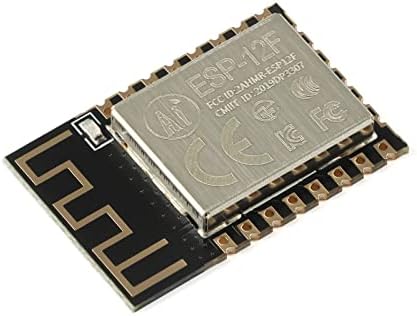
5Pcs ESP-12F ESP8266 Wireless Transceiver Board Module WiFi ESP8266 Microcontroller 802.11N Serial Remote Port Network Development Board for Arduino NodeMCU
Disponibilidad
En stock
En stock
Peso con empaque
0.20 kg
0.20 kg
Devolución
Sí
Sí
Condición
Nuevo
Nuevo
Producto de
Amazon
Amazon
Sobre este producto
- Complete 802.11b/g/n Wi-Fi SoC module, built-in Tensilica L106 ultra-low power 32-bit micro MCU, main frequency support 80 MHz and 160 MHz, support RTOS
- Built-in 1-channel 10-bit high-precision ADC, supports UART/GPIO/ADC/PWM/SPI/I2C interface
- Integrated Wi-Fi MAC/ BB/RF/PA/LNA supports multiple sleep modes, deep sleep current is as low as 20uA, and serial port rate can reach up to 4Mbps
- Embedded Lwip protocol stack, supports STA/AP/STA AP working mode, supports Smart Config(APP)/AirKiss one-click network distribution for Android and IOS
- Support serial port local upgrade and remote firmware upgrade (FOTA), general AT instructions can be quickly started, support secondary development, and integrate Windows and Linux development environments
$51,42
60% OFF
$20,57
IMPORT EASILY
By purchasing this product you can deduct VAT with your RUT number
$51,42
60% OFF
$20,57
Envío gratis
Llega en 5 a 12 días hábiles
Con envío
 Tienes garantia de entrega
Este producto viaja
de USA ![]() a tus manos en
a tus manos en
![]()
 a tus manos en


Compra protegida
Disfruta de una experiencia de compra segura y confiable
![]() Garantía de entrega
Garantía de entrega
Con Tiendamia todas tus compras cuentan con Garantía de Entrega o devolución total de tu dinero.
Compras 100% seguras y garantizadas, para que pidas lo que sueñas y lo recibas del mundo a tu puerta.
Tarjetas de Débito y Crédito

Visa

Mastercard

American Express

Dinners

Discover

Alias
Pagos a través de PayPal
Compra procesada en dólares con dinero en cuenta o tarjetas internacionales.

PayPal
Conoce más detalles
ESP-12F is a Wi-Fi module. The core processor of the module ESP8266 integrate ultra-low power 32-bit micro MCU in a smaller size package with 16-bit reduced mode. The main frequency supports 80 MHz and 160 MHz, supports RTOS, and integrates Wi-Fi MAC/ BB/RF/PA/LNA. The ESP-12F Wi-Fi module supports the standard IEEE802.11 B/g/n protocol and the complete TCP/IP protocol stack. Users can use this module to add networking functions to existing devices, or they can build independent network controllers. The ESP8266 is a high-performance wireless SoC, which provides maximum practicability at the lowest cost and unlimited possibilities for embedding Wi-Fi functions into other systems. ESP8266 has a complete and self-contained Wi-Fi network function, which can be applied independently or run as a slave on other host MCU. When ESP8266 independent application, it can be started directly from external flash. The built-in high-speed buffer memory is beneficial to improve system performance and optimize the storage system. In another case, the ESP8266 can be used as a Wi-Fi adapter only through SPI/SDIO interface or UART interface and applied to any microcontroller-based design. ESP8266 powerful on-chip processing and storage capabilities, it can integrate sensors and other application-specific devices through GPIO ports, greatly reducing the cost of early development.