









SKU/Artículo: AMZ-B0G3X8PVPC
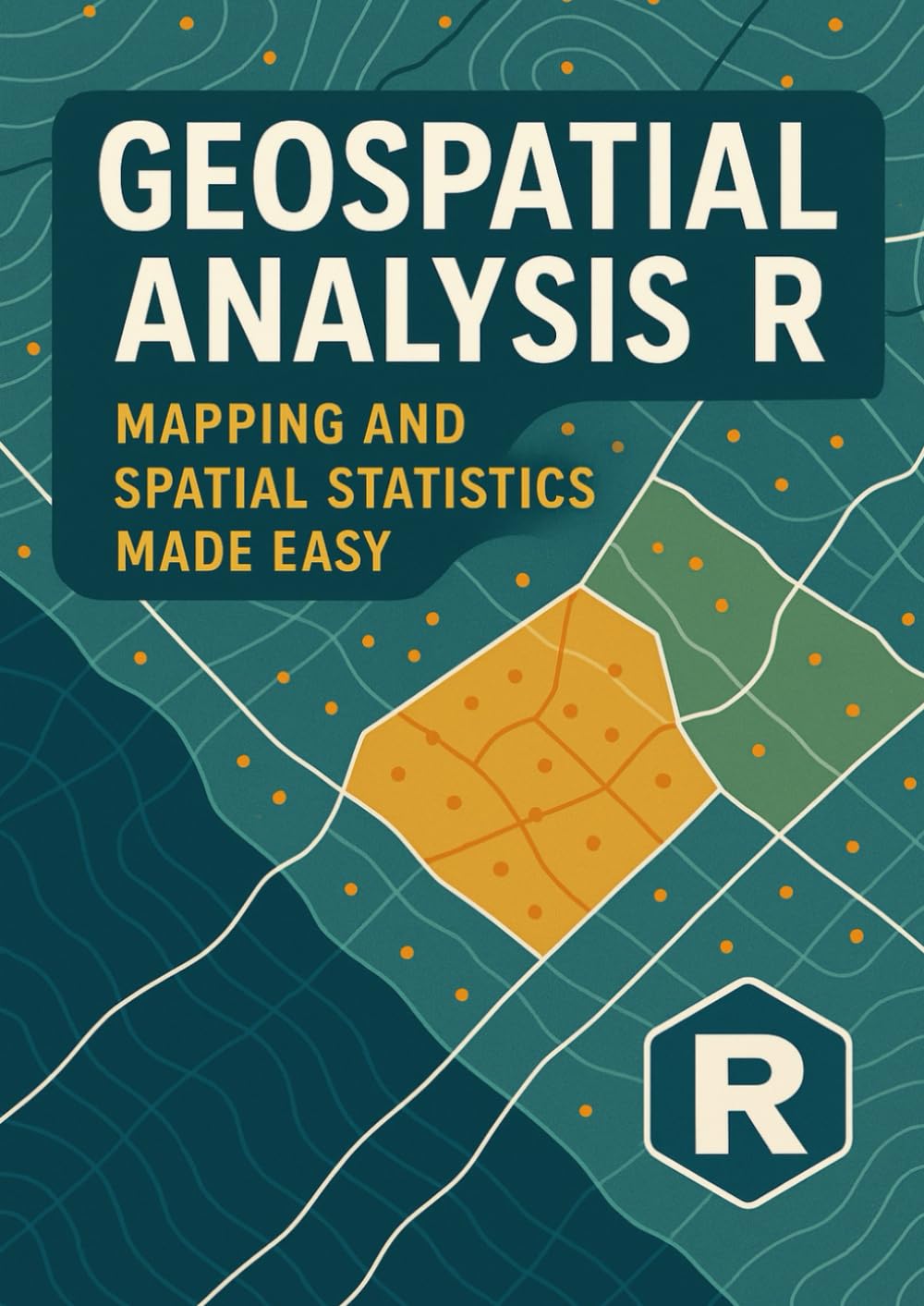
Geospatial Data Analysis: A Hands-On Guide to Processing Satellite Imagery with Python and Managing Spatial Data with PostGIS.
Format:
Paperback
Detalles del producto
Disponibilidad:
En stock
En stock
Peso con empaque:
0.46 kg
0.46 kg
Devolución:
Sí
Sí
Condición
Nuevo
Nuevo
Producto de:
Amazon
Amazon
Viaja desde
USA
USA
Sobre este producto
- Unlock the power of location intelligence by mastering the modern open-source geospatial stack. We are living through a data revolution. Every day, satellites capture terabytes of imagery covering the entire surface of the Earth, and billions of mobile devices generate continuous streams of location data. The traditional methods of analyzing this information, clicking through desktop software menus and manually drawing polygons are no longer sufficient. To handle the scale of modern geospatial data, you need to stop being a user of software and start being a developer of systems. Geospatial Data Analysis is the bridge between traditional GIS workflows and modern software engineering. It is written for the developer who needs to understand the physics of maps and the analyst who needs to master the efficiency of code. This book moves beyond simple mapping tutorials. It is a deep, technical field guide to building production-grade geospatial pipelines. You will learn how to architect systems that can ingest, process, and analyze massive datasets using the industry-standard "Geo Stack": Python for processing and PostGIS for storage. Inside, you will navigate the full lifecycle of spatial data:The Vector Workflow: Move beyond the limitations of the Shapefile. Learn to structure spatial data in PostgreSQL using PostGIS, the world’s most advanced open-source database. You will master Spatial SQL to perform complex queries like proximity searches, spatial joins, and k-nearest neighbor analysis that run in milliseconds rather than minutes.The Raster Workflow: Decode the matrix of satellite imagery. Using Python libraries like Rasterio and NumPy, you will learn to treat images as scientific multi-dimensional arrays. You will write scripts to calculate vegetation indices (NDVI), detect cloud cover using bitmasks, and align rasters with vector data using dynamic reprojection.Computational Geometry: Automate the creation of data. Learn to programmatically clean invalid topologies, generate buffers, calculate convex hulls, and perform geometric intersections without ever touching a mouse.Machine Learning Integration: Bridge the semantic gap between pixels and objects. You will implement Supervised Classification algorithms to automatically categorize land cover types and detect changes in the landscape over time.System Architecture: Learn the engineering principles required for scale. The book covers advanced topics often missed in introductory courses, such as windowed reading for memory-efficient processing, spatial indexing for database performance, and building automated ETL (Extract, Transform, Load) pipelines.What You Will BuildTheory is useless without application. Throughout the book, you will build a robust portfolio of tools, culminating in a complete Urban Expansion Monitoring System. This real-world project will require you to download raw satellite imagery, detect new construction using spectral indices, vectorize the results, and store them in a database to generate automated reports. Who This Book Is ForPython Developers who need to add location intelligence to their applications but struggle with concepts like projections and coordinate systems.GIS Analysts who want to break free from the limitations of GUI-based software and automate their workflows.Data Scientists looking to expand their toolkit to include remote sensing and spatial statistics.Stop treating geospatial data as a special case. Learn to handle it with the same rigor, speed, and scalability as any other data type. Geospatial Data Analysis gives you the code, the concepts, and the confidence to build the next generation of location-aware applications.
AR$82.367
44% OFF
AR$45.756
IMPORT EASILY
By purchasing this product you can deduct VAT with your RUT number
AR$82.367
44% OFF
AR$45.756
 Llega en 8 a 12 días hábiles
con envío
 Tienes garantía de entrega
Este producto viaja
de USA ![]() a tus manos en
a tus manos en
![]()
 a tus manos en

Compra protegida
Disfruta de una experiencia de compra segura y confiable
Tarjetas de Crédito y Débito

Visa

Mastercard

American Express
Pagos a través de PayPal
Compra procesada en dólares con dinero en cuenta o tarjetas internacionales.

Paypal
Pagos a través de MODO
Compra procesada en pesos desde la App de tu banco.

PayPal