












SKU/Artículo: AMZ-B0FXL6BYJB
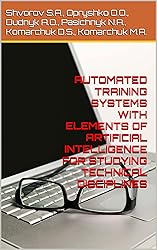
AUTOMATED TRAINING SYSTEMS WITH ELEMENTS OF ARTIFICIAL INTELLIGENCE FOR STUDYING TECHNICAL DISCIPLINES
Format:
Kindle
Detalles del producto
Disponibilidad:
Fuera de stock
Fuera de stock
Peso con empaque:
0.15 kg
0.15 kg
Devolución:
Sí
Sí
Condición
Nuevo
Nuevo
Producto de:
Amazon
Amazon
Viaja desde
USA
USA
Sobre este producto
- Scientific and technological progress, as well as the revival of Ukraine’s industries, are directly linked to the development of automation in management and production processes. The rapid growth of computing technologies and their use in various fields has led to the integration of computers into the training of technical specialists. Today, an important task is to develop computer-based training systems (ALS) and methods that best meet the needs of such specialists.With the increasing complexity and information saturation of training methods, effective learning process management becomes essential. As learning systems grow more complex and multifunctional, serving different categories of users, they must adapt to individual characteristics. The ability of ALS to personalize learning is a key indicator of their effectiveness and intelligence. To achieve this, learner models are developed to store information about each user. Thus, modern ALS include not only educational content but also data about users and mechanisms for managing learning.Many programs today enhance learning efficiency by enabling adaptive dialogues with users—students, trainees, or teachers. The development of ALS has undergone several stages aimed at expanding their capabilities. Early ALS followed rigid scenarios for presenting information and interacting with users. Examples include programmed learning systems and electronic textbooks, which remain relevant. However, due to the rapid growth of information, there is a need for electronic textbooks that allow users not only to navigate hypertext structures but also to ask complex questions. This expands the types of queries users can make and saves time searching for information.Yet, in many systems, users still spend too much time scrolling through electronic references for answers. The complexity of user questions requires improving the description of educational material—not only its structure and content but also semantic relationships between concepts. This approach enables the development of intelligent reference or expert systems (ES), useful both within ALS and in general computer systems. Expert systems store a knowledge base with solutions to various tasks, including laboratory and practical work. This knowledge base is continually updated based on experience and user requirements.The monograph contains seven interconnected chapters.Chapter 1 discusses the specifics of conducting various types of classes in technical disciplines.Chapter 2 presents theoretical and methodological foundations of distance learning in technical education.Chapter 3 covers psychological and pedagogical aspects of using learning systems, with emphasis on cognitive psychology in education.Chapter 4 explores the architecture of ALS.Chapter 5 provides a formal statement of the synthesis problem and methods for selecting a rational ALS design.Chapter 6 examines knowledge representation in ALS and the creation of electronic courses in technical disciplines.Chapter 7 presents methods for planning and organizing learning using ALS, with attention to optimal phased learning and accelerated independent study.

Producto prohibido
Este producto no está disponible
Este producto viaja
de USA ![]() a tus manos en
a tus manos en
![]()
 a tus manos en

Compra protegida
Disfruta de una experiencia de compra segura y confiable
Tarjetas de Crédito y Débito

Visa

Mastercard

American Express
Pagos a través de PayPal
Compra procesada en dólares con dinero en cuenta o tarjetas internacionales.

Paypal
Pagos a través de MODO
Compra procesada en pesos desde la App de tu banco.

PayPal

 Tienes garantía de entrega