














SKU/Artículo: AMZ-B0FH6NSXGS
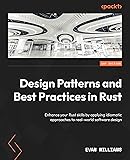
Design Patterns and Best Practices in Rust: Enhance your Rust skills by applying idiomatic approaches to real-world software design
Format:
Kindle
Detalles del producto
Disponibilidad:
Fuera de stock
Fuera de stock
Peso con empaque:
0.76 kg
0.76 kg
Devolución:
Sí
Sí
Condición
Nuevo
Nuevo
Producto de:
Amazon
Amazon
Viaja desde
USA
USA
Sobre este producto
- Write safer, more maintainable Rust code by identifying anti-patterns, applying idiomatic design patterns tailored to ownership, borrowing, and the type system, and learning when to adapt or avoid traditional solutionsKey FeaturesLeverage traits, ownership, borrowing, and lifetimes to structure expressive, modular Rust codeAvoid common anti-patterns and design pitfalls with clear Rust-specific guidanceSolve real-world problems using Rust’s type system, functional idioms, and architecture patternsBook DescriptionMany Rust developers run into problems when they try to apply familiar object-oriented or cross-language patterns to Rust projects. These mismatches often lead to confusing compiler errors, awkward workarounds, or brittle code. This book helps you avoid those traps by thinking in Rust and designing software that embraces ownership, borrowing, and type safety.The book begins with anti-patterns and common mistakes Rust developers often encounter, including misusing object-oriented thinking, over-relying on Clone, or treating the borrow checker as an obstacle. It then guides you through creational, structural, and behavioral patterns adapted to the language, illustrating how traditional approaches must be rethought for Rust.You’ll explore architectural patterns that support clean module design, learn how to use the type system to encode program logic, and discover Rust-native techniques such as TypeState and RAII. The final chapters synthesize these ideas into a Rust-centric design mindset that helps you build software more effectively.By the end of this book, you’ll know how to avoid costly mistakes, apply effective patterns confidently, and design Rust applications that are clean, scalable, and reliable.What you will learnDesign maintainable applications using idiomatic Rust patternsRecognize common anti-patterns that lead to messy or inefficient codeAdapt classic creational, structural, and behavioral patterns to RustLeverage the type system to catch logic errors at compile timeStructure code effectively with modules, traits, and clear interfacesWork with ownership, borrowing, and the type system to simplify data handlingImplement functional techniques for clearer, expressive Rust codeWho this book is forRust developers ready to move beyond the basics and improve how they design and structure code will benefit from this book. If you're comfortable building simple applications and using tools like Cargo, this book will help you write cleaner, more idiomatic, and reliable software.It’s ideal for those looking to understand which patterns work in Rust, how to avoid common traps, and how to tackle more complex, real-world projects with confidence.Table of ContentsWhy is Rust Different?Anti-Pattern: Designing for Object OrientationAnti-Pattern: Using Clone & Rc EverywhereDon't Fight the Borrow CheckerCreational Patterns: Making ThingsStructural Patterns: Connecting & AggregatingBehavioural Patterns 1: Taking ActionsBehavioural Patterns 2: Keeping TrackArchitectural PatternsPatterns that Leverage the Type SystemPatterns from Functional ProgrammingPatterns that use Unique Rust FeaturesLeaning into Rust

Fuera de stock
Selecciona otra opción o busca otro producto.
Este producto viaja
de USA ![]() a tus manos en
a tus manos en
![]()
 a tus manos en

Conoce más detalles
Highlight, take notes, and search in the book
Compra protegida
Disfruta de una experiencia de compra segura y confiable
Tarjetas de Crédito y Débito

Visa

Mastercard

American Express
Pagos a través de PayPal
Compra procesada en dólares con dinero en cuenta o tarjetas internacionales.

Paypal
Pagos a través de MODO
Compra procesada en pesos desde la App de tu banco.

PayPal

 Tienes garantía de entrega