
















SKU/Artículo: AMZ-B0DS1RB723
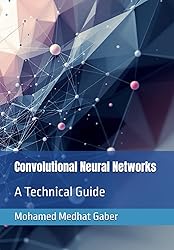
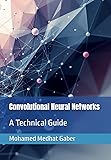
Convolutional Neural Networks: A Technical Guide
Format:
Paperback
Detalles del producto
Disponibilidad:
En stock
En stock
Peso con empaque:
0.28 kg
0.28 kg
Devolución:
Sí
Sí
Condición
Nuevo
Nuevo
Producto de:
Amazon
Amazon
Viaja desde
USA
USA
Sobre este producto
- Unlock the full potential of Convolutional Neural Networks (CNNs) with this comprehensive technical guide. Dive deep into the architecture, mathematics, and practical applications of CNNs, and gain a thorough understanding of how these powerful models work and how to implement them effectively. Whether you're a student, researcher, or industry professional, this book provides invaluable insights into the world of deep learning and CNNs. Beginning with the evolution of neural networks and the motivation behind convolutional layers, the book lays a strong foundation in the core concepts of CNNs. It explores the mathematical underpinnings, including linear algebra and calculus, essential for grasping the complexities of convolutional operations and backpropagation. You'll delve into common layers and operations such as convolutional layers, pooling layers, activation functions, normalization techniques, and understand the significance of residual and skip connections in modern architectures. Journey through historical and modern breakthroughs in CNN architectures, examining pioneering models like LeNet and AlexNet, and advancing to sophisticated architectures such as ResNet and DenseNet. The guide discusses efficiency-oriented models designed for mobile and edge devices, like MobileNet and ShuffleNet, highlighting the trade-offs in deploying CNNs in resource-constrained environments. Practical aspects of data preparation, augmentation, model training, optimisation, regularisation, and generalisation are thoroughly covered, equipping you with the tools needed to develop robust and high-performing CNN models. Beyond image recognition, the book expands into broader applications of CNNs, including object detection, segmentation, video analysis, audio and speech processing, and natural language processing. It explores frontiers and future trends such as lightweight and efficient CNNs, attention mechanisms, transformers, and the integration of CNNs with other paradigms like reinforcement learning and generative adversarial networks. Ethical and societal implications, including bias, fairness, transparency, and privacy, are addressed, emphasising the importance of responsible AI development. Concluding with open problems and emerging research trends, this guide prepares you to contribute to the evolving field of deep learning and CNNs.
AR$26.446
31% OFF
AR$18.234
IMPORT EASILY
By purchasing this product you can deduct VAT with your RUT number
AR$26.446
31% OFF
AR$18.234
 Llega en 8 a 12 días hábiles
con envío
 Tienes garantía de entrega
Este producto viaja
de USA ![]() a tus manos en
a tus manos en
![]()
 a tus manos en

Compra protegida
Disfruta de una experiencia de compra segura y confiable
Tarjetas de Crédito y Débito

Visa

Mastercard

American Express
Pagos a través de PayPal
Compra procesada en dólares con dinero en cuenta o tarjetas internacionales.

Paypal
Pagos a través de MODO
Compra procesada en pesos desde la App de tu banco.

PayPal