







 Garantía de entrega




Artículo: AMZ-B0GCT2WR9W
Structural Governance Failure Pattern Recognition: Identifying Recurrent Accountability Failures in Automated Systems
Format:
Paperback
Detalles del producto
Disponibilidad
En stock
En stock
Peso con empaque
0.25 kg
0.25 kg
Devolución
Sí
Sí
Condición
Nuevo
Nuevo
Producto de
Amazon
Amazon
Viaja desde
USA
USA
Sobre este producto
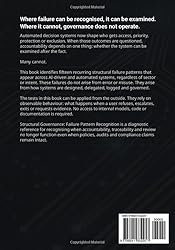
- Automated systems fail in predictable ways. This book documents recurring governance failure patterns that can be recognised from outside the system, without access to internal code, models, or documentation. It is written for readers who need to identify when accountability cannot operate in practice, not to diagnose intent or propose fixes.The focus is recognition. Each chapter names a specific structural condition and shows how it becomes visible through user interaction, absence of evidence, irreversible outcomes, or non-functional safeguards. These failures are not errors or misuse. They persist even when systems operate as designed and arise from architecture, delegation of authority, retention practices, vendor boundaries, and incentive structures.The tests described here are external-facing. They can be applied by users, regulators, auditors, journalists, and investigators through direct interaction with a system and examination of what can and cannot be demonstrated after the fact. No privileged access is required. Recognition is the endpoint. Where a condition is present, accountability cannot be made to function regardless of explanation or assurance. This book documents fifteen structural failures that appear when AI-driven systems operate at scale. These failures persist even when systems work exactly as designed. They arise from architecture, retention practices, contractual boundaries, delegation patterns and incentive structures; not from bugs, errors or misconduct. What this book is notThis is not a compliance guideIt does not certify correctness or determine legalityIt does not prescribe architecture, safeguards, or remediesIt does not interpret statutes or establish regulatory standardsThe tests stop at recognition. They identify whether a structural condition exists. What follows, enforcement, remedy, redesign or litigation belongs to other processes and other authorities. Who this book is forSenior technologists and governance professionals confronting systems that claim accountability but cannot demonstrate itRegulators documenting why evidence cannot be produced under scrutinyLegal practitioners reconstructing decisions that left no usable trailJournalists and researchers investigating automated power without internal accessAnyone who recognises recurring failures but lacks precise language to name themThe structural reality Governance depends on evidence that survives time, where required evidence cannot be produced oversight cannot operate as designed. Some rules require not only correct behaviour, but demonstrable correctness, where demonstration fails evidential absence itself becomes exposure. Recognition is not the end of analysis, it is the beginning of accountability that can withstand scrutiny.
$44,39
49% OFF
$22,77
IMPORT EASILY
By purchasing this product you can deduct VAT with your RUT number
$44,39
49% OFF
$22,77
Envío gratis
 Llega en 5 a 12 días hábiles
Con envío
 Tienes garantia de entrega
Este producto viaja
de USA ![]() a tus manos en
a tus manos en
![]()
 a tus manos en

Compra protegida
Disfruta de una experiencia de compra segura y confiable
![]() Garantía de entrega
Garantía de entrega
Con Tiendamia todas tus compras cuentan con Garantía de Entrega o devolución total de tu dinero.
Compras 100% seguras y garantizadas, para que pidas lo que sueñas y lo recibas del mundo a tu puerta.
Tarjetas de Débito y Crédito

Visa

Mastercard

American Express

Dinners

Discover

Alias
Pagos a través de PayPal
Compra procesada en dólares con dinero en cuenta o tarjetas internacionales.

PayPal

.svg)